Dental crowns in Weybridge
Crowns to protect and restore broken, cracked or heavily filled teeth. Made in porcelain, gold or porcelain bonded to metal, with a written plan and fee before we start.
- Fee
- From £980
- Google reviews
- 4.9

What a dental crown does
A dental crown is a cap that covers the whole visible part of a tooth, down to the gum line. It is made in the shape of a natural tooth and fixed in place. Its job is to hold a weakened tooth together so you can bite on it again with confidence.
Crowns are different from veneers, which cover only the front surface of a tooth. Because a crown wraps around the whole tooth, more of the tooth has to be shaped to make room for it. For that reason we only suggest a crown when a smaller repair would not protect the tooth well enough.
When a crown may be the right choice
- A tooth that has broken, cracked or chipped
- A tooth weakened by a large filling or by decay
- A back tooth that has had root canal treatment and needs protection from fracture
- A tooth worn down by grinding or acid erosion
- A discoloured or misshapen tooth where simpler options will not work
- A tooth that will support one end of a bridge
Many people search for a "dental crown post". This usually means a post crown. When a root-filled tooth has lost much of its structure, a small post can sometimes be placed in the root to help hold the core that the crown sits on. Whether this is sensible depends on how much sound tooth is left. If we think a tooth is too weak to restore, we will tell you plainly.
Dental crowns at Post House Dental
Assessment first
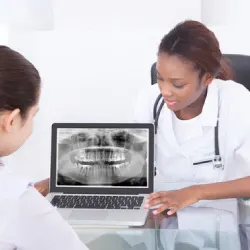
Every crown starts with an examination and x-rays. These show the root, the surrounding bone and any old fillings or decay hidden under the surface. All treatment is subject to a consultation and assessment. Sometimes we find that a smaller restoration such as an onlay would protect the tooth while keeping more of it. Where that is the case, we will say so.
We use magnification in almost all procedures, including tooth preparation. Our surgical microscopes let the dentist see the edges of the preparation in fine detail. They also take high-definition photographs and video, which we use to show you what we found and what we did.
Preparing the tooth
At the first treatment appointment the tooth is numbed with local anaesthetic. You should feel no pain during treatment because the area is numb, although you will notice pressure and vibration. The dentist removes any decay and old filling material. The tooth is then shaped to make space for the crown. We record its new shape so the crown can be made to fit it exactly.
Before you leave, we fit a temporary crown. It protects the tooth and lets you eat and smile normally while the final crown is made.
Fitting the crown
At the second visit we remove the temporary crown, check the fit of the new one and adjust your bite. Once you and the dentist are happy, it is fixed in place. We may ask you back a short while later to check that it is comfortable and secure.
Crown materials
The right material depends on where the tooth is and how much of it remains. How hard you bite matters too, as does how visible the tooth is when you smile. We offer three main types.
- All-porcelain crowns. Made entirely of ceramic with no metal. They let light through in a way similar to natural enamel, so they are often chosen for front teeth.
- Porcelain bonded to metal crowns. A metal base with porcelain layered over it. This is a long-established option. Over time a thin dark line can sometimes show at the gum.
- Gold crowns. Hard-wearing and gentle on the teeth they bite against. They suit back teeth where appearance matters less.
We will explain why we suggest a particular material and talk you through the alternatives before you decide.
Alternatives to a crown
A crown is not the only way to repair a damaged tooth. Depending on what we find, other options include:
- A white composite filling for smaller areas of damage
- An onlay, which covers only the weakened part of the tooth
- A porcelain veneer, where the concern is mainly the front surface
- Removing the tooth and replacing it with a dental implant or a bridge, if the tooth cannot be saved
Our approach leans towards keeping as much natural tooth as possible. A tooth that keeps more of its own structure is usually easier to look after in the long run.
How much does a dental crown cost?
At Post House Dental a zirconia crown or a porcelain bonded to metal (PFM) crown is £980, an E.max crown is £980 to £1,250 and a gold crown is from £1,250. A crown on a dental implant is £1,650. The fee for your crown depends on the material, the tooth involved and whether other treatment is needed first, such as root canal treatment or a core build-up. After your assessment you will receive a written treatment plan. It confirms the fee before any work begins. You can see our full price list on our fees page.
NHS or private crowns
We provide both NHS and private dental care. Whether a crown can be provided on the NHS depends on clinical need and on our NHS availability at the time, so we cannot promise it in advance. Please ask us when you call. Online booking is for private appointments only. Our article on private and NHS crown costs explains the differences in more detail.
Recovery and aftercare
Once the anaesthetic wears off, the tooth may feel tender or sensitive to cold for a few days. This usually settles on its own. Your bite should feel normal. If the crown feels high or uneven, call us so we can adjust it.
Look after a crown as you would a natural tooth. Brush twice a day and clean between your teeth every day, paying attention to the gum line where the crown meets the tooth. The tooth underneath can still decay. Regular check-ups and hygiene visits help us catch problems early.
How long a crown lasts varies from person to person. It depends on the material, your bite, any grinding habit and how well the area is kept clean. Our article on how long dental crowns last covers this in more detail.
Why patients choose Post House Dental for crowns
We have cared for patients in Weybridge since 1978, from The Old Post House on Heath Road. Our team is committed to postgraduate education. We put weight on evidence-based dentistry and on preventive care that keeps treatment to a minimum.
For crowns, that means careful diagnosis with digital x-rays, preparation under a surgical microscope and clear photographs that help you understand your own teeth. You will know what we suggest, why we suggest it and what it will cost before we start.
Your treatment, step by step
-
1
Consultation and x-rays
We examine the tooth and take x-rays. Then we explain whether a crown or a smaller repair would suit it.
-
2
Written treatment plan
You receive a written plan with the material we recommend and the confirmed fee.
-
3
Preparing the tooth
The tooth is numbed and shaped under magnification. We record its shape and fit a temporary crown.
-
4
Fitting the crown
We check the fit and your bite before fixing the final crown in place.
-
5
Review
We may see you again shortly afterwards to check that the crown is comfortable and secure.
Fees
| E.max crown | £980 to £1,250 |
|---|---|
| Zirconia crown | £980 |
| Gold crown | From £1,250 |
| Porcelain bonded to metal (PFM) crown | £980 |
| Fibre post and core | £225 |
| Cast post and core | £320 |
| Recement crown | £95 |
Your exact fee depends on your assessment. We give you a written treatment plan with costs before any treatment starts. See all fees.
Before and after
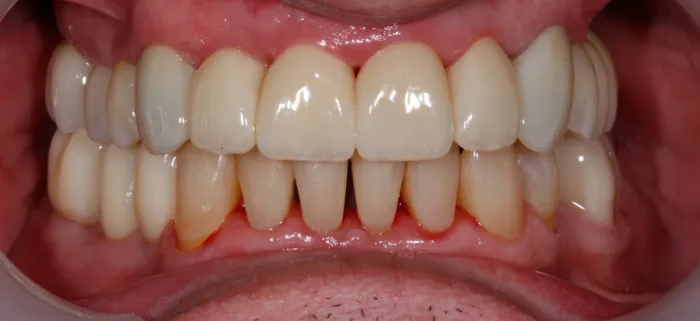
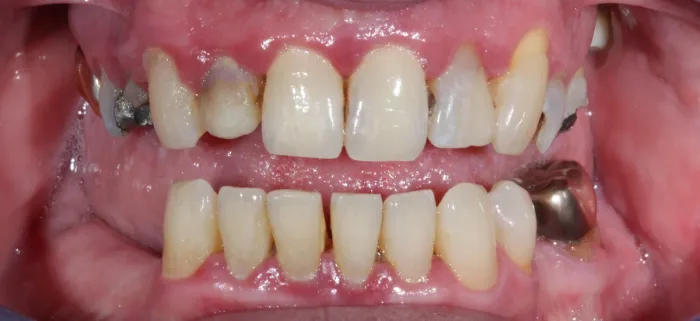
Composite fillings and crowns
Crowns and dental implants
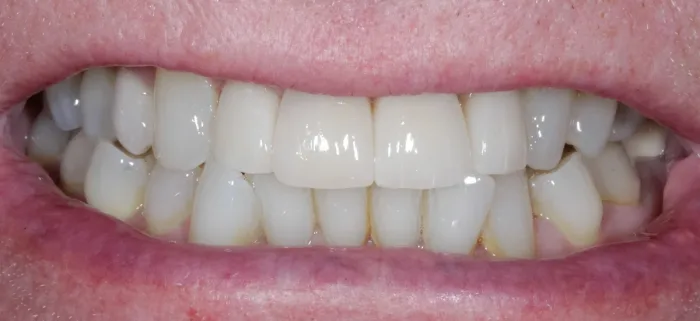
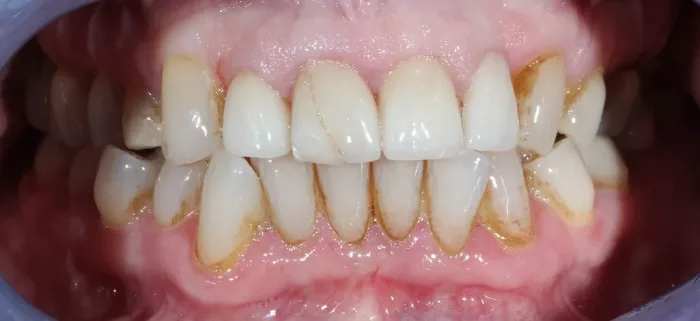
Real patients, shown with their consent and not retouched. Results vary from person to person. See all before and after photos.
Questions patients ask
How much does a dental crown cost in Weybridge?
At Post House Dental a zirconia crown or a porcelain bonded to metal (PFM) crown is £980, an E.max crown is £980 to £1,250 and a gold crown is from £1,250. A crown on a dental implant is £1,650. The final fee depends on the material and the tooth involved. It also depends on whether you need other treatment first, such as a root canal or a core build-up. We confirm the fee in a written treatment plan after your assessment, before any work begins. Our fees page lists all our prices.
Does having a crown fitted hurt?
The tooth is numbed with local anaesthetic before we start. You should feel no pain during treatment because the area is numb, though you will notice pressure and vibration. Afterwards the tooth may feel tender or sensitive to cold for a few days. Most patients find this settles without any treatment. If you are anxious about dental work, tell us beforehand so we can plan the appointment with you.
How long does a dental crown last?
There is no fixed answer. How long a crown lasts depends on the material and on the forces from your bite. Grinding your teeth shortens its life. So does decay at the edge of the crown, which is why daily cleaning matters. With good home care and regular check-ups, many crowns serve well for a long time. We will talk you through what affects your own crown at your assessment.
What is a post crown?
A post crown is used on a tooth that has had root canal treatment and has lost much of its structure. A small post is placed in the root to help hold a core. The crown is then fitted over that core. A post is not always needed and is not always wise, because it can weaken a thin root. We decide case by case after looking at your x-rays.
Can I have a crown on the NHS?
We provide both NHS and private care. Whether a crown can be provided on the NHS depends on clinical need and on our NHS availability at the time, so we cannot promise it in advance. Please call the practice to ask. Online booking is for private appointments only. If NHS treatment is not available, we can explain the private options and their fees.
Which crown material is right for me?
It depends on where the tooth sits and how much of it remains. All-porcelain crowns are often chosen for front teeth because they look most like enamel. Gold is hard-wearing and suits back teeth. Porcelain bonded to metal sits between the two. Your bite and any grinding habit also matter. We will recommend a material at your assessment and explain why.